The Dutch rank #1 in the world in English-as-a-foreign-language proficiency, and they have been ranking #1 consistently every year for many years now, according to yearly reports by the Education First (EF) organization. (Wikipedia.)
I can attest that at least in the Randstad area, (where half the population of the country lives,) almost everyone speaks English, and many do so very fluently.
Nonetheless, there are certain mistakes that the Dutch are somewhat prone to make in English, mostly due to interference from peculiarities of the Dutch language. When this happens, it is called Dutchlish or Dunglish. The phenomenon is acknowledged by the Dutch, who have their own word for it: Steenkolenengels, which literally means coal-English.
The List
Here is a long list of examples of Steenkolenengels that I have compiled over the course of several years of living in The Netherlands.
I will learn you how to skate.
Learn instead of teach
From Dutch leren, which means either to learn or to teach, depending on context.
(In Dutch, a teacher is a leerar, a student is a leerling, and they both engage in leren; go figure.)
When you want, we also have it in white.
When instead of if
Apparently because mixing als (=if) with waneer (=when) is also a common mistake in Dutch.
Let's meet at sex.
Sex instead of six
From Dutch zes, which means six.
This is not really a common mistake, but I have personally heard it, and I think it is funny enough to deserve including.
(Freudian slip? LOL!)
Dear colleagues, hereby the schedule.
Hereby instead of Here is or Hereby I give you.
Because in Dutch, hierbij (which sounds and means the same as hereby) can in fact be used alone like that; however, in English, it cannot: you have to add a verb.
Also note that there is some advice going around to avoid "hereby" unless you are a lawyer, because it is considered too formal, but that's a matter of taste. The requirement for hereby to be followed by a verb is not a matter of taste; it is dictated by grammar.
We have lot's of bicycle's
In the written word, using apostrophe -s to signify plural.
In English, plural is signified with -s alone, whereas apostrophe -s signifies genitive (possessive) case. In Dutch however, plural can in fact be signified with apostrophe -s. Different language, different rules. Unfortunately, this makes it easy for Dutchies to get confused, and use Dutch language rules when writing English, which leads to things like "lot's of bicycle's".
I used to get considerably annoyed when I would come across this mistake in written conversations on the Internet, but now I get less annoyed thinking that maybe the person making this mistake is Dutch, and their English is so good that you can't tell, except for such little hints.
Meet you at the busstop
In the written word, concatenating words that are not normally concatenated in English.
In Dutch it is very common to concatenate words to form new words. (As it is in German.) That is, for example, how come the Dutch word for Multiple personality disorder is Meervoudigepersoonlijkheidsstoornis.
So, to the Dutch, the term bus stop as two separate words looks unnatural; when they see bus stop they are seized with an overwhelming desire to concatenate the two words into one: busstop. However, this is not a valid thing to do in English.
I swear I can sometimes hear them using concatenated terms like busstop even in the spoken word. (Or maybe I am just imagining it.)
I have seen this word concatenation in a professional environment, where the English version of the employee policies manual had the following great big huge title printed on the cover:
EMPLOYEEPOLICIES
Let's have a telco
Telco instead of teleconference.
The Dutch words for telephone and conference are telefoon and conferentie, so the Dutch have every right to create the word telco in their own language, if they so please.
The mistake that they sometimes make is using this word when speaking English, because to English speakers, telco generally does not mean anything, and if it was to mean something, that would perhaps be telecommunications company.
Turn on the airco
Airco instead of air-conditioner.
The Dutch word for air sounds nothing like air; (it is lucht;) so, the word airco is probably the result of the Dutch trying to forge a word that is intended to sound English.
However, for English-speakers, airco does not mean anything, and if it was to mean something, that would perhaps be airline company.
Apparently, the Dutch do not make the connection between "co" and "company", perhaps because in their language the word for company sounds nothing like company; it is bedrijf.
Estimate repair laptop
In titles, word ordering that makes no sense in English.
The Dutch apparently have certain special rules dictating how to write signs, titles, and e-mail subjects: the sentence is first written in its fully spelled out form, and then all the small words are removed. So, the title "The estimate for the repair of the laptop" in Dutch is "De schatting voor de reparatie van de laptop", and to turn this into a title we remove all the small words to be left with "Schatting reparatie laptop".
Unfortunately, the Dutch are prone to follow the same rule when writing in English, yielding "Estimate repair laptop" (or "Estimate laptop repair" at best) which either makes no sense or means something different.
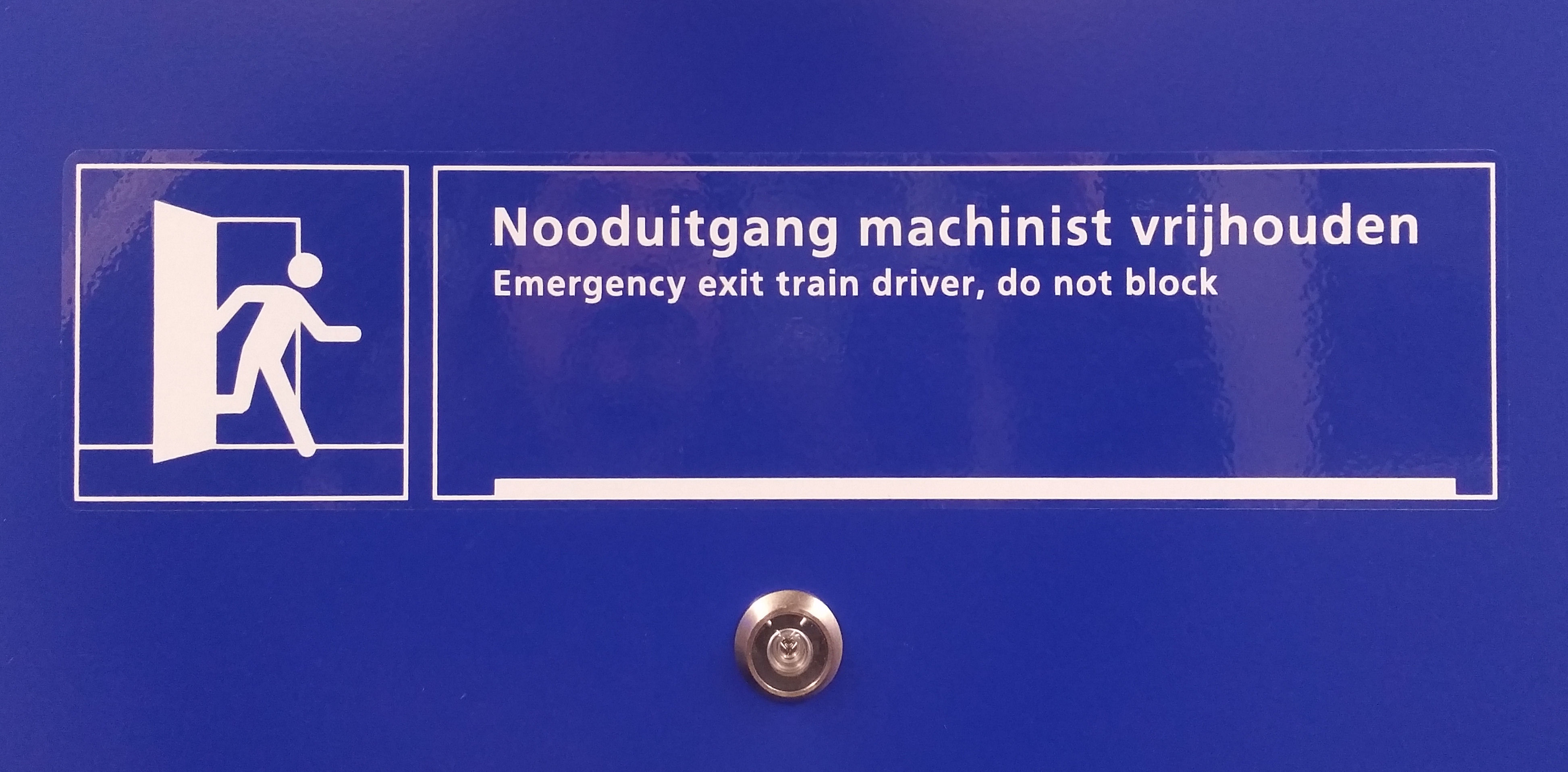
My favorite example of this is a sign that you can see in every single train in the entire little Kingdom of The Netherlands. The Dutch text says Nooduitgang machinist vrijhouden and the English translation below it says Emergency exit train driver, do not block. (Uh, what?)
 |
|---|
| A sign in Dutch trains, with Dutch text and Dutchlish translation. |
Note how the sentence would be valid not only in Dutch but also in English if the small words had not been omitted:
- Nooduitgang (van de) machinist vrijhouden
- Emergency exit (of the) train driver, do not block.
How long are you?
Long instead of tall.
In English, when speaking of a person's height, for some reason we do not use the word high; we use the word tall instead. When the Dutch want to speak of a person's height they also refrain from using their word for high, (which, is hoog,) but they have no unnecessary extra word like tall; so, they use the word lang instead, which means long.
As a consequence, when a Dutch person wants to ask you, in English, how tall you are, they may inadvertently ask you how long you are.
(Another Freudian slip? LOL!)
Let's make a photo
Make instead of take for photos.
From Dutch foto maken.
Can I lend your umbrella?
Lend instead of borrow.
From Dutch lenen which means either to lend or to borrow, depending on context.
(In Dutch, the one who borrows is a lener, the one who lends is an uitlener, and they both engage in lenen; go figure.)
You want just the bread?
Bread instead of Hamburger.
No, the McDonald's employee is not seriously considering that you might want nothing but a plain piece of bread; what they mean to ask instead is whether you want the hamburger alone, or the entire combo consisting of the hamburger plus fries plus drink. They say "bread" because they are translating word for word from Dutch, where every edible item that is served on bread is referred to as a broodje, which means bread.
Fodafone
In the spoken word, pronouncing the letter V as if it was an F.
Dutch pronunciation rules tend to cause some weirdness in the spoken word; for example, when you call Vodafone in The Netherlands, the recorded greeting welcomes you to "Fodafone". Here I have recorded two such greetings, one from sales, one from billing:
This is due to some weirdness in how the letter V sounds in the Dutch language. A similar weirdness also exists in German; if you are an English speaker, chances are you have always pronounced Volkswagen wrongly; the correct pronunciation is folks-va-gen. (The letter V is supposed to sound like an English F, and the letter W is supposed to sound like an English V.)
Now, the Dutch are free to make the rules in their own language and pronounce their letters in whatever way they please; however, the use of Dutch pronunciation rules is questionable when it comes to saying names originating outside of The Netherlands, such as Vodafone, a company that hails from the UK.
This is not to say that I know of an easy solution to this problem, or that there could be a solution to this problem:
- We cannot expect the Dutch to know by heart how foreign words are supposed to sound in foreign languages, and to make an exception to the rules of their language when pronouncing such words;
- I certainly would not be in favor of giving the company name Vodafone a different spelling just for the Dutch market;
- I am not even sure that there exists some spelling that would achieve a "V" sound in the beginning of a Dutch word.
So, it may well be that things could not be done otherwise.
Tax for Taxi
Tax in reference to taxi.
Naturally, taxi firms all over the world tend to want to do their best to communicate in English, because their clients are often tourists, and the international language of tourism is English. It is surprising then, that many taxi companies in The Netherlands use "tax" to mean "taxi".
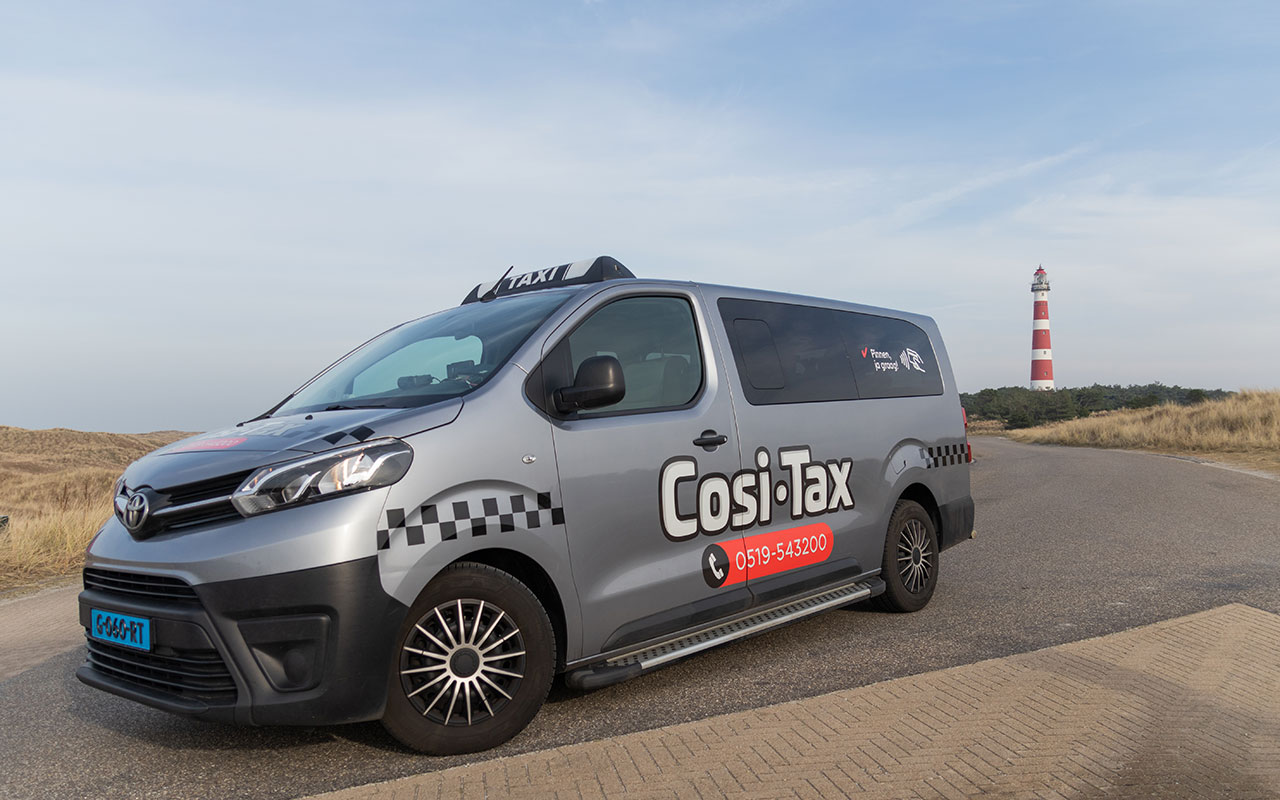
Here is an indicative list of Dutch domain names that belong to taxi firms: my-tax.nl; atax.nl; btax.nl; t-tax.nl; v-tax.nl ahrotax.nl; cosi-tax.nl; ataxeindhoven.nl; eagletax.nl; star-tax.nl; and my personal favorite, city-tax.nl. Apparently, many Dutchies are under the impression that the word "tax" evokes the notion of "taxi" in English, but this is not at all so; in the English-speaking world, all of these domain names would belong to nothing but accounting firms.
And fun fact: in Europe, another name for "city tax" is "tourist tax"; probably not an association you want to be making if you are a taxi service.
I used to think that perhaps the Dutch are making this mistake because their word for tax sounds nothing like "tax", it is belasting, so maybe they do not associate "tax" with taxation, but according to the Dutch dictionary, the word tax also exists in their language, and is in fact related to taxation. So, how come the Dutch feel free to use "tax" to stand for taxi, is beyond me.
Another fun fact: The word taxi is a shortening of the word taxicab. The word taxicab is a contraction of the term taximeter cabriolet. Cabriolet is a type of light, horse-drawn carriage. Taximeter is a blend of Greek metron (measure) and Latin taxa, which means charging a fee. So, albeit very remotely, "taxi" is in fact related to "tax" in English. The Dutch are not entirely wrong on this one, after all!
Absenteeism from work
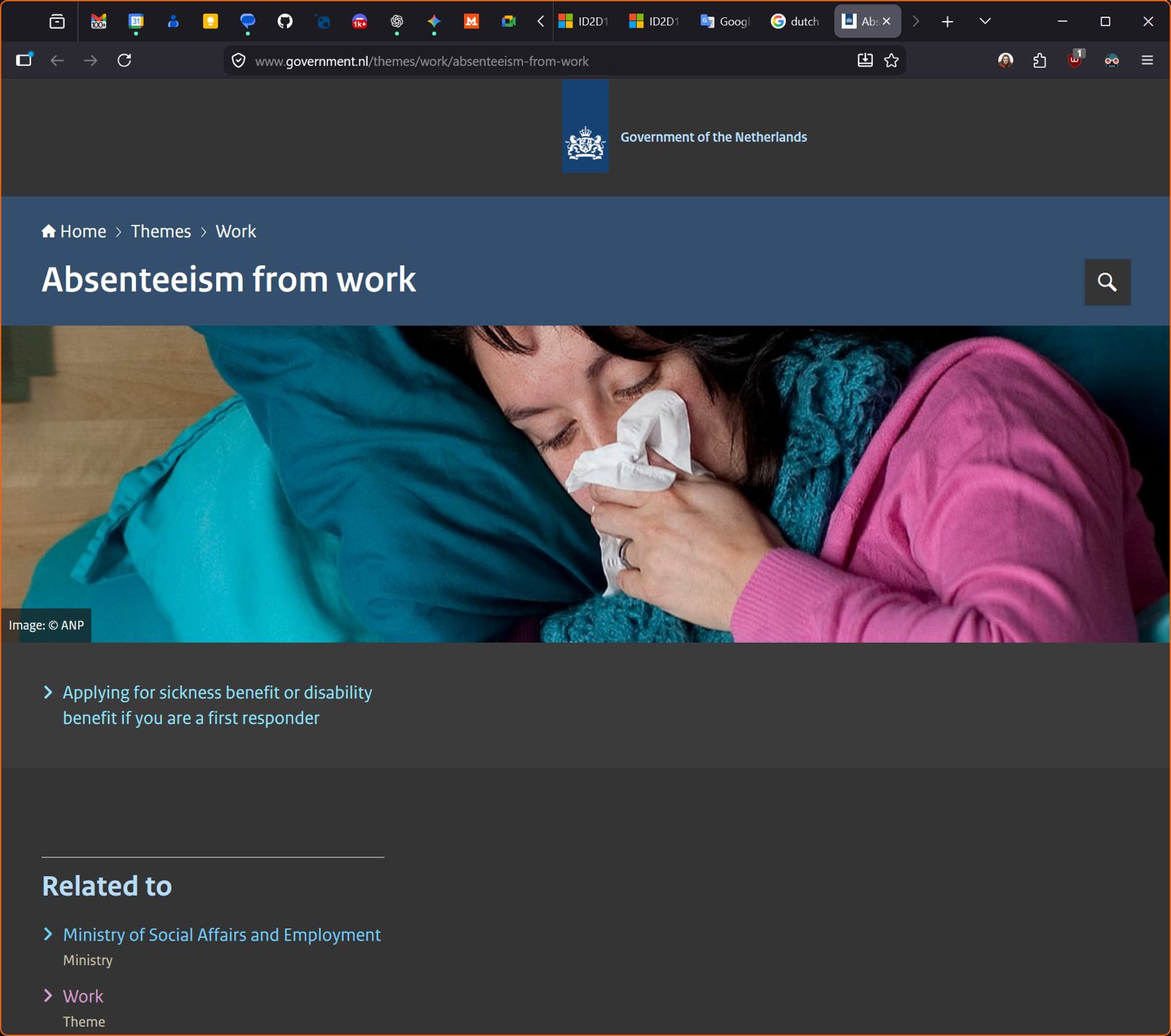
Use of the word absenteeism instead of absence when referring to sick leave.
This is naive translation of the Dutch word verzuim, which means absenteeism in every-day language, but absence in legal, official and generally formal contexts. Translating verzuim to absenteeism in formal speech is not just wrong; it is embarrassingly wrong, because absenteeism specifically means a habitual pattern of unexcused absence from duties, and is therefore presumptuous and insulting.
This mistake can even be seen in official Dutch government communications in English, for example here: https://www.government.nl/themes/work/absenteeism-from-work
I suspect this stems from the rampant, indiscriminate, and uncritical use of Microsoft Office machine translation:
- Google Translate plays it safe, and translates verzuim to absence, whereas
- Microsoft carelessly translates verzuim to absenteeism.
I want to react further
React instead of respond.
This appears to be direct translation from Dutch ik wil meer reageren where reageren means react, but also respond, which is actually the word that should have been used in this case.
It is a nuanced difference, but it can sometimes cause confusion.
You must confirm before the 31st
You must instead of please.
Maybe this is an example of the famous Dutch directness: the Dutch will not hesitate to use commanding words when they need to convey urgency and/or definitiveness; however, the use of such words in English sounds rude.
How late is it?
How late instead of what time.
This is word-for-word translation from the Dutch phrase hoe laat is het? which literally means how late is it?.
Maybe this just goes to show how strong the morning culture is in The Netherlands: everything after wake-up time is late.
Right of wrong
Of instead of or.
Because the Dutch word for or is in fact of. Go figure.
(And if you are wondering what their word for of is, you already know it; it is van, as in Vincent van Gogh, or Eddie van Halen. And remember, it is pronounced "fan", not "van".)
Further reading...
If you have not had enough of this already, then:
- head over to the Wikipedia entry for Dunglish, with a lot of amusing information
- head over to dunglish.nl for the all-you-can-eat buffet.
Cover image: "Dutch Tongue" by michael.gr, based on the logo of The Rolling Stones and the Flag of the Kingdom of the Netherlands.